Monday, 29 February 2016

LEAP YEAR DAY


Long ago, when I was a young child, a voice from the radio would occasionally declare in deep and solemn tones: “lift up your hearts!” I subsequently discovered that this phrase was used in Church, but in those days I remember clutching my chest and trying to stand up very straight. I was convinced that in so doing I could – literally – lift up my heart.

Today the radio informed me that it was Leap Year Day and I should make the most of this ‘extra day’ which only comes around once every four years! My immediate thought was that I wanted to do something cheerful and fulfilling which might improve the way 2016 has gone so far. My spirits were somewhat dampened as I turned to the necessary task of telephoning the garage where our car must limp to tomorrow after a three week wait for a ‘senior technician’ to plug it into the Nissan computer. Such unavoidable calls are depressing, particularly when they promise to phone back and don’t.

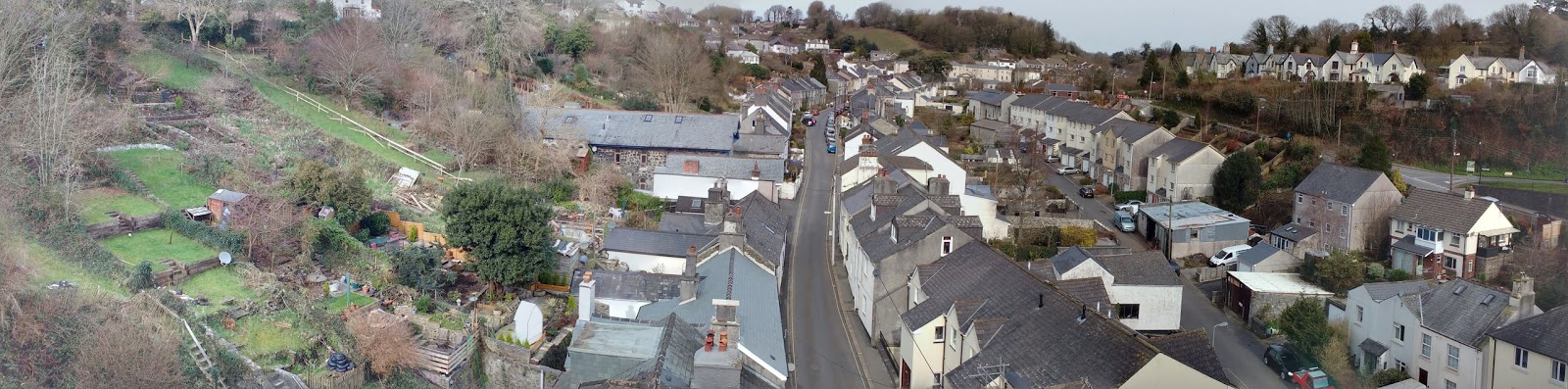
So we decided to go out and stretch our legs. The sun was almost out. The road closure half-way down the hill was actually being worked on. And the view from the viaduct over Tavistock was stunning.


It wasn’t really a phenomenal way to celebrate this ‘extra day’, but it lifted our hearts a little and brought a smile. I failed to write anything other than these few sentences, but I hope today has brought a few smiles and laughter to my readers. Roll on Spring!


Monday, 15 February 2016

CLARITY


There is sometimes an infuriating moment of clarity at the point of falling asleep which can drive a writer mad! Thoughts are at their purest and ideas can begin to unfold. Start to focus and your muscles tighten in appreciation, sleep falls away and insomnia beckons. Ignore the seduction and you risk forgetting it all. One solution I have tried is jotting down a few lines, but this involves turning on a torch and gathering one’s equipment. Whilst good for creativity the next day, this is not ideal for getting back to sleep.

You don’t have to be a writer for this to happen; anyone can be affected by ‘last minute’ thoughts before sleeping. I am currently trying out a method of putting them to one side by treating them as a ‘practice run’. I have found that I don’t actually forget these ideas. They continue to reside there, somewhere, in my mind – which is much better at storage than I realise. When next I sit down to write, perhaps taking inspiration from something as beautiful as the jar pictured, as I relax so the ideas flood back. 
 

The blue jar, which is in fact very old and once contained a poisonous substance, was a gift from M who rather apologetically thrust it at me on Saturday. It was wrapped in bubble-wrap inside a plastic bag, and although he made the excuse of a ‘Valentine present’, it is something I admired recently in the Tavistock Indoor Market. Discussing it with Richard, the stall-holder, we exchanged ideas on how colours can be inspiring. This particular blue is stunning and my eyes kept being drawn back to it.

You may find it odd therefore, that the colour of the jar has led to the expansion of an idea in which colour is absent. In this extract from my current work, a little discussion takes place in another dimension of the universe between two people trapped in a grey place:

...“First, though, I need to explain about the light. Do you know about the colours which humans can’t see? The importance of these other colours? …Now, at home we have light and dark, don’t we? And our colour spectrum kind of goes from light to dark.”
“Well, that’s very simplistic,” Helen almost laughed.
“OK, but what is unknown to us is that there is a third thing which is neither light nor dark. I call it ‘lark’ for lack of any other word.” He felt himself smile once more. “This kind of half-light which we’re in here is lark...”

The concept of a third element is not easy to convey, but much of my writing expresses such things. More importantly, it occurs to me that this grey place, neither light nor dark, can also exist in human minds as something we might experience when suffering from depression. Many years ago I endured a kind of depression in which even colours looked different and the most homely and comforting of things surrounding me appeared hostile. Luckily this was a temporary state, but there are some for whom it has become permanent.

Colour should not be taken for granted. I count it a luxury which enriches all I see around me. Having known and worked with blind people I am thankful I have the ability to perceive it. Some of the extraordinary and beautiful photographs which crowd the internet call out to be looked at, enjoyed and shared. So I hope you will enjoy my picture of the blue jar, and that it will add clarity and colour to your day!

Tuesday, 19 January 2016

MISSING PRESUMED ALIVE?


In the last years of his life a dear old uncle, usually a cheerful, humorous man, became depressed about one aspect of his life about which he could do nothing: the death of his friends. Scrutinising the deaths section of the ‘Telegraph’ became a daily ritual. Spotting one, he would nod slightly, acknowledging the loss. He would find his address book; perhaps telephone the spouse and offer condolences in his friendly, comforting voice, or – if the spouse had already died, then a soft pencil line might mark the fact that no Christmas card would be sent this year.

There comes a point in life when this begins to happen: attending more funerals than parties, noting more absences than new arrivals and expressing more sympathy on bereavement than on depression. But one little light shines through the gloom: when a death brings together a family which has scattered and lost touch.

I am a serious family history researcher, and have wasted more hours than I care to admit to in searching for lost relatives. They can be almost impossible to track – family historians refer to them as ‘strays’, but the meaning can be far deeper and sadder than this term.

Several years ago I undertook a thankless task, researching a family group with a widespread surname and few records, who had dispersed – some of them across the globe. It became a joke that when I was bored I would turn to this branch and attempt some research, only to sink into apathy at my computer and force myself to do something else. Then a stroke of luck led to a breakthrough and I rediscovered some of my husband’s cousins and an uncle, about whom he had wondered and worried for many years. We were back in touch and rediscovering the delights of shared memories as well as (in my case) making wonderful new friends. There was still someone missing though: the uncle was concerned (as my husband had been) as to the whereabouts of his other niece. She was someone quiet, shy and very private. For several years Christmas cards had not been returned, letters had been unanswered and no-one had heard from her. Since none of us lived anywhere near and internet searches proved fruitless, time moved on and life continued. The uncle died and was mourned, and still we knew nothing of her.

Then the other day a breakthrough came, but not one which any of us would have wanted. The cousin had been found, at home, by council workers. She had died at least three months previously.
In the jumble of one’s thoughts and the words ‘how’ and ‘why’ come the justifications and self-recriminations. ‘We all tried.’ ‘You can’t force a person to write back.’ ‘You can’t always find a person on the internet.’ Then: ‘we should have tried a bit harder’; ‘we should have gone there’. In the many telephone conversations which follow, I seize upon the word ‘depression’ – which somehow hasn’t come up before in the context of this woman. And there, I think, lies the answer. I’m not a psychologist, I have no such knowledge or training, but I have experience and age enough to conclude that this terrible illness can indeed lead to a kind of suicide through apathy and loneliness – not intentional or deliberate, but just as fatal in the end.

My article was not intended to be depressing. This death has had a surprisingly positive effect and one which I hope would please its perpetrator: it has reunited her family. They are back in contact, laughing at old memories and enjoying hearing familiar voices and shared history. She is alive again in their minds, as youthful and vital as she was before tragedy struck. Yes, they are also reliving grudges and dislike of long-dead elders, as we all do, but as we re-assess our younger days and what seem like happy, carefree times, so we re-inject a little of that vitality into today. Or so I hope!


SMCH 1944-2015

Tuesday, 5 January 2016

LAUGHING IN JANUARY


How can this month NOT be depressing? Everywhere you turn there is something which reduces the already low light a little further: the weather, the news, family problems, health problems… I could go on. Wondering how to make this month’s article more light-hearted, I started to make a list of things which are guaranteed to make me laugh – because laughter is the very best way to feel a little better.


A recent edition of ‘Desert Island Discs’ featured a well-known actress, choosing as one of her eight pieces of ‘music’ for a desert island, that famous clip from ‘Test Match Special’ in which the charismatic commentator Brian Johnston attempts to describe a cricket match whilst smothering his bottled-up laughter. He fails, of course, and becomes incoherent at the microphone. It’s so infectious, and you can hear the muffled sounds of his colleagues, collapsing around him with mirth. I was suffering badly from ‘Post-Christmas-Blues’ when this was playing the other day, but it never fails to make me stop what I’m doing and laugh – and the magic worked again. This clip dates from August 1991 and is now almost twenty five years old, yet retains its ability to entertain – perhaps because the incident was an accident, unplanned and unrehearsed.


My late father’s family was notorious for being able to see ‘the funny side’ of things. A mid-1920s photo shows my grandfather and his two eldest children laughing at something. He throws back his head, regardless of his clergyman’s collar, in an uninhibited moment of enjoyment. The two younger children are uncertain and my grandfather’s sister definitely hasn’t understood, but this only makes the photo more natural. Seeing his relaxed joyful expression of mirth always makes me smile.


In this photo, taken more than sixty five years later, the same two eldest children share humour in their eighties.


Sometimes it is extremely hard to pull back from a sudden reminder of the past, and instead you become overwhelmed by it. January holds difficult memories for me, and the 'Blues' I described above returned to haunt me the other day, for no apparent reason. Here is a little story:

I spent the first day of the New Year, more than thirty years ago, in Epsom Hospital undergoing a series of painful and uncomfortable examinations in which various members of the medical profession attempted to ascertain whether or not my unborn baby was breech (upside-down). No-one could decide. In the end I was carted off to X-Ray in a wheelchair. The hospital seemed strangely quiet – it was a bank holiday, remember, and the corridors and lifts were empty. The hospital porter was chatty, and obviously having a dull day. After the X-Ray had been taken, he and I crammed ourselves inside the little processing room with the nurse, where the three of us glumly viewed the negative hanging in front of us in which a tiny little skeleton sat waiting to be born… the wrong way up. 

The nurse shooed us out of X-Ray, and as we rolled back along the deserted corridors to the ward, the porter said,
‘Reckon you’ll need a Caesarean Section.’
‘What?’ I said, beginning to find the whole day both painful and frightening.
‘That baby’s large,’ he continued, his voice filled with the wisdom of one whom nothing would surprise. ‘And high,’ he added.
 
He was right, but it was only the beginning of my problems. Back on the ward, various nurses – unhappy that they were the ones having to work on a bank holiday – discussed my case in front of me. It seemed that no surgeon was around to perform the operation, so it would need to take place on the following day.
‘We could let you go into labour,’ one nurse suggested, ‘just so that you know what it’s like and don’t feel cheated out of it.’ I glared at her.
‘Just get this baby out!’ I snarled.
 
By this time everyone was beginning to wonder where my absent husband was. He had disappeared once the first examinations began, when he realised that he could take advantage of the situation to go and contact Elaine. And that was my biggest problem: Elaine. He re-appeared at visiting time (in those days you couldn’t just come and go the way it works now,) and was annoyed to discover that he would not be able to attend the birth because it would be an operation. I still wonder, to this day, why he felt this.  Because, you see, he was having an affair with Elaine, and planned to leave me after the baby arrived. They had discussed it at length, and this was what they had decided.
 
The next morning there was a flap on because the hospital needed to get hold of my husband. It seems hard to believe now, but they required his permission to perform the operation. In the marital home the telephone rang and rang. And rang, unanswered. In the end, I made a fuss. I was twenty-seven years old, I told them. I suggested that they might try contacting my parents? In the end someone with enormous common sense must have backed down, because they allowed me to sign the form which permitted them to operate on me and liberate the poor little skeleton still waiting inside me… upside down.
 
They say it’s the best day of your life when you give birth to your baby and it is placed in your arms. I have to comment that seeing my little son for the first time, feeling his tiny body in my arms, was for me one of the best things ever. But as for the rest of it… These memories are dark ones, followed in subsequent weeks by some of the worst days of my life. But that was then.
 

And this is now! 

Here we are, in January 2016, in what seems like another life. As I close the door on that particular memory I feel depressed at the revisitation, but in an odd way glad I went there. ‘The past is another country’, said L P Hartley so profoundly, and in my opinion when you make your exit you cross a boundary. You may not return, you may not change anything, you can simply revisit in your mind and then let go – for if you don’t, it will haunt you forever.
 
I wish all my readers a Happy New Year, good health and strength. If you must make a resolution, I recommend adding as much laughter into your life as you can.
And in case you are feeling a little low and would like to hear the Brian Johnston clip, here it is: Brian Johnston & Jonathan Agnew 1991 - enjoy it!

Sunday, 6 December 2015

NO PRESENTS THIS CHRISTMAS


Right at the end of the telephone conversation my son, who clearly had not been relishing telling me, announced:
‘N’s father has decided not to give presents this year, so we’ve decided the same. Are you OK with this?’
‘No presents?’ I heard myself repeat in a voice choked with disbelief, ‘What? No Christmas presents? Christmas won’t be Christmas without presents….’
‘Well,’ he struggled to find something with which to mollify his spoilt mother, ‘maybe think about it and talk it over with M? We’re all skint anyway, so it’s a great help.’ He added little more in this vein other than to leave it to me to break the idea to his grandmother and uncle.

Much to my amazement, the other members of my very small family were in agreement. Well, at least the male members were.  At eighty six the matriarch of us is very frail now, and it was felt that we must of course give presents to her.  At this point I should explain that we have no children in our family and the youngest of us is thirty five, so Christmas has become a much less exciting time of year than it might be for larger families. Its religious significance is also rather lost on us, and we are simply left with days in which good food is planned around odd medical conditions and shortage of funds, the hope that none of us falls ill and the exchange of… well… presents.

I am sorry to say, none of us is keen to give the money we might save to good causes. This has already been done for us by a rather sanctimonious aunt, who when she died left hundreds of thousands of pounds to good causes. We were all slightly miffed by this, and as a result whilst we do what we can for charity shops and poppy sellers, it ends there.

But this article is not about the virtues or failings of our attitudes to charity. I am relating the story because of an unexpected side effect, and this is the relief we have all felt at having the burden of Christmas-present-buying removed from us. It is quite extraordinary how much more enjoyable these weeks before Christmas become when life is so much simpler. There is time to stand around and listen to Christmas carols, brass bands and general merry-making in the town. Time to talk to shopkeepers about how they are doing, to sympathise and agree with what is happening to them. I have time to make (knit) some presents for well-deserving people, and to write letters which contain more news and opinions, and less ‘annual tripe’ than usual. I’m not dreading writing out my Christmas cards, and the planning of meals is a far more relaxed and agreeable task.

In a way, this Christmas-without-presents is an experiment. If we hate it, we can revert to a ‘normal’ Christmas next time. I am not sure we will, because I’m feeling a great deal more ‘Christmas Spirit’ by concentrating on the things which really matter at this time: taking time to talk, to listen and to love one’s family and friends. They won’t be with us forever.

Season’s Greetings!